

If you’re trying to fix messy books but your bank balance doesn’t match your accounts, your VAT feels wrong, or your reports don’t make sense, your books aren’t just “a bit messy.
They’re costing you money.
Messy bookkeeping is one of the most common problems we see, especially in growing businesses. The good news? It can be fixed, quickly and correctly if you follow the right process.
In this guide, you’ll learn:
- How to fix messy books step by step
- The most common bookkeeping mistakes
- When to stop DIY and get professional help
Signs You Need to Fix Messy Books Urgently
Before we dive in, here are clear warning signs:
- Your bank accounts don’t reconcile
- VAT returns don’t match your reports
- You have duplicate or missing transactions
- You’re months (or years) behind
- Your accountant keeps asking questions you can’t answer
- Financial reports don’t reflect reality
If you recognise even 2–3 of these, you likely need a bookkeeping cleanup.
Why You Must Fix Messy Books Before It Costs You
Ignoring the problem can lead to:
- HMRC penalties and compliance risks
- Overpaying or underpaying tax
- Poor cash flow decisions
- Delays in year-end accounts
- Difficulty getting loans or investment
Most businesses don’t realise the impact until it’s too late.
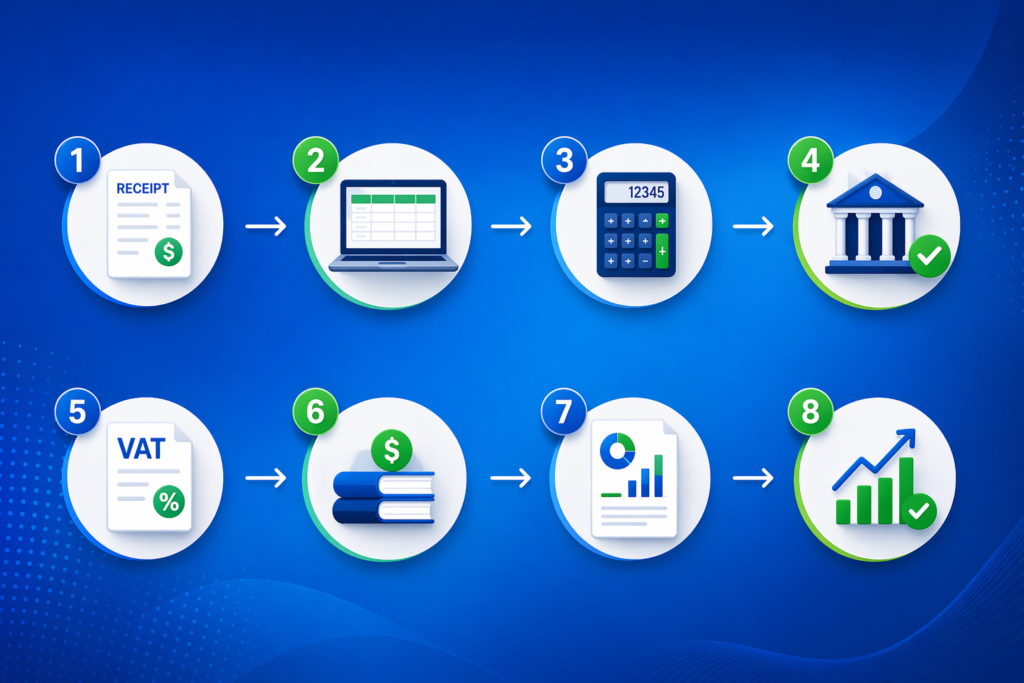
Step-by-Step: How to Fix Messy Books
1. Assess the Damage
Start by understanding the scope:
- How far back are your books incorrect?
- Which accounts are affected?
- Are VAT returns already submitted?
Run:
- Trial Balance
- Profit & Loss
- Balance Sheet
Look for inconsistencies and unusual balances.
2. Gather All Financial Records
You cannot fix incomplete data.
Collect:
- Bank & credit card statements
- Sales invoices
- Purchase bills
- Payroll records
- VAT filings
Missing data is one of the biggest reasons cleanups fail.
3. Reconcile All Bank Accounts
This is the foundation of accurate bookkeeping.
- Match every transaction to your bank statement
- Identify missing, duplicated, or unmatched entries
- Investigate differences
If your bank doesn’t reconcile, nothing else can be trusted.
4. Fix Duplicate & Missing Transactions
Common issues we see:
- Duplicate bank feeds
- Income recorded without invoices
- Missing expenses
- Incorrect payment allocations
Clean these carefully, mistakes here can distort your entire financial position.
5. Review VAT Codes & Returns
VAT errors are one of the biggest risks in messy books.
Check:
- Correct VAT rates applied
- Proper treatment of zero-rated/exempt items
- VAT returns vs accounting reports
If errors were submitted, you may need to correct past VAT filings.
6. Clean Up the Chart of Accounts
Over time, accounts become cluttered and inconsistent.
- Merge duplicate accounts
- Reclassify incorrect transactions
- Standardise naming conventions
This step improves reporting clarity immediately.
7. Review Financial Reports Properly
Once cleaned:
Check:
- Profit & Loss
- Balance Sheet
- Accounts Receivable & Payable
Look for:
- Negative balances where they shouldn’t exist
- Old unpaid invoices
- Unusual spikes or inconsistencies
8. Lock Historical Periods
Once everything is correct:
- Lock previous periods
- Ensure VAT aligns with final figures
This prevents future errors and protects your cleanup work.
How Long Does a Bookkeeping Cleanup Take?
Typical timelines:
- 1–3 months backlog → a few days
- 6–12 months → 1–2 weeks
- 2–5 years → several weeks
The complexity (not just time) determines the effort.
Why DIY Attempts to Fix Messy Books Often Fail
This is important.
Most business owners:
- Miss hidden errors
- Break VAT reporting
- Misclassify transactions
- Create bigger problems than before
We regularly see clients who tried to fix it themselves, and ended up needing a full rebuild.
When to Use a Bookkeeping Cleanup Service
You should seriously consider professional help if:
- Your books are behind by months or years
- VAT may be incorrect
- You need accurate numbers urgently
- You’re unsure where errors are coming from
A professional cleanup saves time, reduces risk, and ensures compliance.
Real-World Insight
Most businesses we work with come to us with:
- Unreconciled bank accounts
- Incorrect VAT returns
- Years of backlogged data
And in many cases, we fix everything in days or weeks, not months.
Final Thoughts on How to Fix Messy Books
Messy books aren’t just an inconvenience, they’re a financial risk.
The sooner you fix them:
- The more accurate your decisions
- The lower your compliance risk
- The better your business performs
Need Help to Fix Messy Books?
If your accounts are messy, behind, or simply not making sense, you don’t have to deal with it alone.
At Rescue My Books, we specialise in:
- Bookkeeping cleanup & rescue
- VAT corrections
- Xero & QuickBooks cleanup
- Catch-up bookkeeping (months or years)
Get your books reviewed today and bring your finances back under control.
FAQs
Can I fix messy books myself?
Yes, but only for minor issues. Complex problems (VAT errors, multi-year backlog) usually require professional cleanup.
How much does bookkeeping cleanup cost?
It depends on volume, complexity, and how far back the issues go. Most providers assess this after reviewing your books.
How far back can books be corrected?
There’s no strict limit, but typically businesses clean up 1–5 years of data.
Which software is best for fixing messy books?
Xero and QuickBooks are the most common. However, cleanup quality depends more on expertise than software.